
Prep Your Outdoor Signs for Holland MI Winters to Protect Visibility and Reduce Repairs
Simple, practical steps Holland businesses can take to keep outdoor signs visible and reduce winter repairs. Covers inspection, sealing, illumination protection, mounting, materials and when to call D Sign, LLC.
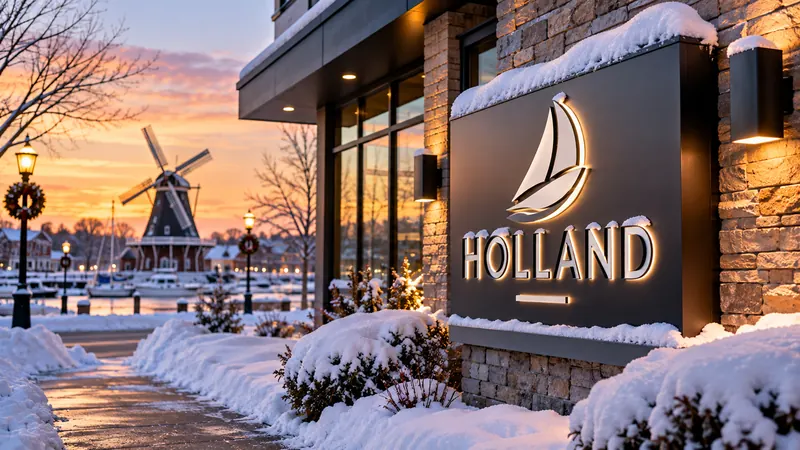
Yes. Prepare outdoor signs before winter by inspecting structure and mounting, cleaning and resealing exposed edges, protecting illumination and scheduling professional maintenance, and by documenting existing conditions so you can prioritize repairs, plan materials and communicate clearly with contractors and maintenance crews. These steps keep signs visible, reduce frozen, wind- or moisture-related repairs, lower the likelihood of emergency service calls and help prevent safety and liability issues related to fallen or electrically compromised signage.
What winter hazards threaten my outdoor signs in Holland, MI?
The main threats are moisture from snow and rain, freezing and thaw cycles, heavy snowfall loading, and wind stress, all of which can cause seal failure, corrosion of metal parts, lifting of vinyl and flashing, and electrical failures in illuminated signs.
Holland receives measurable precipitation throughout the year, so plan for water exposure when you design and maintain signs according to the NOAA Summary of Monthly Normals, paying attention to seasonal patterns so sealants, drainage details and material choices match local conditions and service expectations.
Snowfall can be significant; the Michigan EGLE progress report notes average annual snowfall near Holland is about 56.4 inches which increases static and sliding loads on horizontal surfaces and sign housings, so plan for that weight and the extra water from melting and refreezing, and include regular snow clearing and inspection of horizontal sign faces, canopies and rooftop or awning signage to prevent collapse and water intrusion (Michigan EGLE).
Wind can dislodge improperly anchored signs; the National Weather Service climate summary for the area reports an average wind speed of 8.4 mph, so anchor and flange details should be rated for local gusts and exposure, and mounting designs should include appropriate shear capacity, embedment depth and post-installation checks after high-wind events (NWS Grand Rapids climate summary).
How should I inspect and seal my sign before the first freeze?
Start with a focused pre-winter inspection and address small failures before freezing weather makes repairs harder and more expensive, prioritizing failed seals, loose hardware and any signs of water entry into electrical compartments.
- Surface cleaning. Remove dirt, salt residue and bird droppings with a mild detergent and soft brush to prevent abrasion and premature coating failure, then rinse thoroughly to avoid chemical residue and check surfaces for paint or laminate damage.
- Check seams and edges. Inspect all exposed seams on cabinet signs, routed signs and channel letters and replace old sealant with a low-temperature-rated silicone or polyurethane sealant designed for exterior use, making sure the chosen product is compatible with adjacent paints and substrates.
- Examine fasteners and backing plates. Tighten hardware and replace corroded bolts and washers with stainless or hot-dipped galvanized equivalents to resist salt and melting snow, and apply anti-seize or corrosion-inhibiting coatings where appropriate to extend service life.
- Assess vinyl lettering and digital prints. Confirm vinyl lettering edges and laminated print edges are fully adhered and re-roll or reapply any lifting vinyl to prevent water intrusion beneath graphics, using manufacturer-recommended adhesion promoters or heat application when needed for a durable bond.
- Document visible damage. Photograph loose letters, cracked faces or rusted supports and note exact locations, orientation and nearby drainage paths so you and your sign company can prioritize repairs and plan corrective measures.
How do I protect illuminated and electronic signs from cold and moisture?
Keep illumination reliable by controlling moisture ingress, preventing condensation and protecting power components, since water and moisture on electronics lead to shorts and premature driver failure.
- Seal wiring entries. Use weatherproof conduit fittings and silicone around any power feed points and junction boxes to stop water from entering enclosures, and inspect gaskets and entry seals annually to confirm continued integrity.
- Use desiccants and breathe vents. Place desiccant packs inside sign cabinets and install screened breather vents so condensation can escape instead of pooling on circuits or LEDs, and replace desiccants on a maintenance schedule to retain absorption capacity.
- Choose cold-rated components. Use LED electronic sign drivers and fixtures rated for low temperatures and confirm manufacturers specify the temperature range for the LED modules, and prefer components with built-in thermal management features for longer life.
- Install thermostats or heater kits if needed. In signs that trap air, a small internal heater or thermostat prevents condensation and protects batteries and electronics during prolonged sub-freezing weather, and set controls to maintain cabinet temperature above the dew point to reduce cycling and stress on components.
How can I secure mounts and reduce wind and snow damage?
Strengthen attachments, review foundations and reduce exposed surface area where possible to resist wind and snow loads, and establish a routine schedule for torque checks and corrosion inspections so issues are found early.
Start by inspecting anchor bolts, base plates, and concrete footings and make sure they meet original specifications or local building codes; tighten or replace hardware that shows rust or movement. For blade signs and pylon signs, consider backing plates or wind-through design to lessen sail effect. Use stainless steel fasteners and lock washers for coastal or salt-prone exposure, and check that monument sign concrete footings are free of heaving or cracking after freeze-thaw cycles. For tall or heavily loaded installations consult a structural or sign engineer to verify anchor designs and uplift resistance and to document required repairs.
What materials and sign types hold up best in Holland winters?
Select materials that resist moisture, thermal cycling and impact to minimize repairs and reduce maintenance frequency, balancing initial cost against long-term durability and the specific exposure conditions at each location.
- Aluminum and stainless steel. These metals resist rust and are excellent for cabinet signs, channel letters and dimensional letters in exterior conditions, and they provide a stable substrate for finishes and attachment hardware.
- High-density PVC and foam/fabrications. When properly painted and sealed, routed signs and dimensional letters in high-density materials resist moisture and are lighter for easier mounting, which can reduce stress on anchors during freeze-thaw movement.
- Acrylic faces and polycarbonate panels. Use thicker, UV-stabilized acrylic for illuminated sign faces and choose polycarbonate where impact resistance is needed; confirm edges are properly sealed to prevent water ingress into light cavities.
- Vinyl and digital prints. Use outdoor-rated vinyl lettering and laminated digital prints designed for low-temperature adhesion to avoid edge lift during freeze-thaw cycles and choose lamination films that are compatible with the inks and substrates.
When should I schedule professional service and emergency repairs?
Schedule a professional pre-winter inspection in fall, check signs after major storms, and book post-winter repairs in spring to address both immediate safety concerns and deferred maintenance that can worsen over the summer.
D Sign, LLC in Holland, MI recommends a fall inspection to catch loose fasteners, failing seals and electrical issues before they are exposed to extended cold and snow. If a sign becomes unsafe or inoperable after a storm, call for emergency service and keep the area clear until a technician evaluates the mount and structure. After the thaw, arrange a post-winter assessment to repair hidden water damage and correct foundation or alignment issues, and ask your service provider for a written prioritized repair plan and timeline.
What is a practical winter checklist I can use right now?
Use this checklist to get started before the first major freeze.
- Clean sign faces and remove salt and grime.
- Inspect and reseal seams with exterior-grade sealant.
- Replace corroded fasteners and tighten mounts.
- Check LED drivers, ballast housings and conduit for moisture.
- Install desiccants or breather vents in cabinets.
- Document damage and schedule professional service if you find structural problems.
How D Sign, LLC helps Holland and nearby businesses
D Sign, LLC in Holland, MI serves Holland and surrounding West Michigan communities with fabrication, installation, refurbishment and LED/electrical repairs to keep exterior signage safe and visible year-round. We inspect mounts, reseal cabinets, upgrade illumination components and replace damaged graphics to reduce repeat repairs, and we coordinate work to comply with local codes and ADA-compliant signage requirements when needed, providing written estimates and a prioritized scope so property managers and business owners can budget repairs.
Preparing outdoor signs for winter protects visibility, extends service life and reduces emergency repair costs. If you want help with a pre-winter inspection or a maintenance plan, contact D Sign, LLC in Holland to schedule a review and get a prioritized plan for your exterior signage.
Frequently asked questions
How often should I inspect my outdoor signs in winter?
Inspect outdoor signs at least once before the first freeze in fall and again after any major winter storm to check for loose mounts, water intrusion and illuminated sign failures.
Can I seal my sign seams myself before winter?
Yes, you can reseal small gaps using a low-temperature-rated silicone or polyurethane exterior sealant, but structural issues and electrical repairs should be handled by a qualified sign technician.
Do LED signs need special winter protection?
LED signs should have sealed electrical entries, desiccants or breather vents and cold-rated drivers to prevent moisture damage and ensure reliable operation in low temperatures.
Will salt from roads damage my sign?
Yes, road salt can accelerate metal corrosion and degrade finishes, so clean salt residue regularly and use stainless or galvanized hardware where exposure is common.
When is it time to call D Sign, LLC for repairs?
Call D Sign, LLC for repairs when you find loose or bent mounts, cracked faces, exposed wiring, or any condition that compromises safety or electrical function.
This article was generated by ArticlesGR.ai by PixelGR.com
Sources
- Summary of Monthly Normals ncei.noaa.gov
- PROGRESS REPORT NUMBER TWENTY michigan.gov
- National Weather Service - Holland climate summary (Grand Rapids NWS) forecast.weather.gov