
Monument or Pylon Signs: Which Is Right for Your Holland, MI Property
A practical guide for Holland, Michigan property owners comparing monument and pylon signs by height, placement, visibility, permits, illumination and durability.
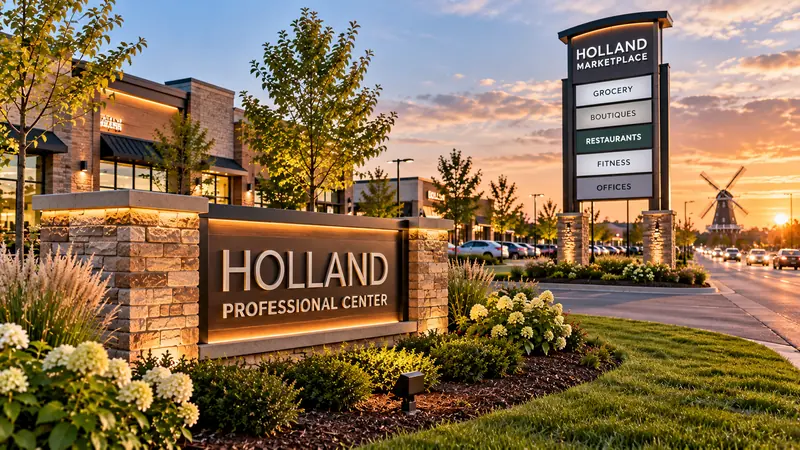
Short answer: Choose a monument sign when close-range aesthetics and architectural fit matter, and choose a pylon sign when you need visibility from faster roads or longer distances. D-Sign LLC in Holland, Michigan helps property owners weigh visibility, placement, permits and construction so the sign you install actually works for your property.
What is the basic difference between a monument sign and a pylon sign?
A monument sign is low and grounded, while a pylon sign is taller and mounted on one or more columns to lift the message for distant viewing.
These low, monument structures sit near grade and are often built with masonry, concrete, stone veneer or metal bases that relate to the building architecture. Pylons are elevated on steel or engineered supports and are designed to be seen across larger setbacks and higher-speed roads.
How do height and structure affect visibility and placement?
Height and structure determine how far a sign can be read and where it can be placed on a parcel.
For legibility, a common guideline is one inch of letter height for every 30 feet of viewing distance, which helps set letter size and sign height during design; see the MUTCD guidance for letter height legibility.
When a property sits near an interstate or a primary highway, spacing rules and highway-adjacent considerations may limit where tall signs can be placed, and digital signs have their own spacing requirements on major roads as noted by state highway advertising rules.
When does a lower-profile monument sign work well?
A monument sign works well when customers are already close, when architectural appearance matters, and where streets are slower or more pedestrian-oriented, and when wayfinding at close range is the priority.
Common applications in Holland include professional offices, medical facilities, residential developments and shopping centers where the sign must match building materials and landscaping. A monument sign also suits plazas with short setbacks from sidewalks or local streets, where a lower profile supports wayfinding without dominating the view.
When is a pylon sign the better choice?
A pylon sign is the better choice when you need to be visible from a busy road, higher speed traffic or from a longer viewing distance.
Examples include highway-facing shopping centers, multi-tenant retail strips with tenants seeking roadside exposure, and service businesses located behind a large setback or berm. Pylon signs can incorporate multi-tenant panels, channel letters, or LED electronic message centers to serve several tenants and to communicate changing messages to passing motorists.
How do traffic speed, setback and property layout influence the decision?
Traffic speed, setback and layout define how early and how long drivers see your sign, which affects both sign size and messaging choices.
Faster traffic requires larger letters and higher placement to give drivers time to read; the MUTCD letter height guidance helps determine letter size needed for clear reading at given distances. Setback from the road means the sign must be taller or use larger letters to remain readable, while tight setbacks favor monument signs that work at close range.
How should tenant count and multi-tenant needs affect the sign type?
Use a pylon if you need prominent shared exposure for many tenants, and use a monument sign for smaller, design-focused multi-tenant settings.
Pylon signs provide stackable or panel options for multi-tenant identification and often pair well with LED electronic sign faces for time-sensitive messages. Monument signs can include multi-tenant directories or routed sign panels, but space is limited, and legibility at distance is reduced compared with elevated pylon solutions.
What role do illumination and electronic message centers play?
Illumination increases visibility in low light and can be handled in either monument or pylon configurations, while LED electronic message centers extend the sign’s usefulness for changing messages.
Electronic signs can boost engagement for retail promotions and public notices, but their use is often regulated by local zoning and state highway rules; for major highways, state guidance sets spacing and placement parameters for digital signs that owners must consider.
How does branding and architectural appearance factor into the choice?
Match sign type to your brand intent: use monument signs when materiality, scale and streetscape harmony matter; choose pylons when maximum reach is the goal.
Monument designs can use stone, brick, routed letters, dimensional letters and integrated landscaping to reinforce a high-quality aesthetic. Pylon designs emphasize scale and visibility, and they can still reflect brand colors and logo treatments through channel letters, routed sign faces and durable finishes.
How should West Michigan weather affect construction choices?
Durable materials and engineering for snow, wind and freeze-thaw are critical for any Holland-area sign.
Choose corrosion-resistant metals, proper foundation design, sealed LED modules, weather-rated electrical components and finishes intended for cold, wet conditions. We recommend fabrication and installation practices that address West Michigan wind loads and freeze-thaw cycles so signs remain secure and serviceable.
Do local zoning and permits change what I can install?
Yes. Zoning, set-back rules and permitting influence available options and must be verified before final design and fabrication.
Along state-controlled highways, specific spacing and digital sign limits apply, including rules for distances between sign structures and between digital signs; check state highway advertising rules for those specifics. Local municipalities in Holland and surrounding West Michigan communities also regulate height, setback, illumination and sign area, so allow time to confirm requirements during the planning phase.
How should I evaluate visibility versus aesthetics?
Weigh how customers find your location against how the sign fits the property visually, and prioritize the primary goal: attract passing traffic or reinforce a branded environment at close range.
If curb appeal and integration with building architecture matter more, start from a monument concept and scale up only as needed. If roadside capture and tenant exposure are the priority, start from a pylon concept and refine materials and lighting to improve appearance while keeping visibility high.
How can D-Sign LLC help determine the right solution for my Holland-area property?
The company provides site visits, visibility studies, permit assistance, fabrication and installation for both monument and pylon signs in Holland, Michigan and the surrounding West Michigan communities, and we include practical checks of sight lines and permit constraints during those visits.
We review traffic approaches, setback, tenant needs, branding goals and local rules, and we recommend durable materials and engineering appropriate for West Michigan weather. For permit and highway-adjacent considerations we factor in state-level spacing guidance for highway signs to ensure your proposal aligns with applicable restrictions.
When you are ready, we offer a free consultation to walk the site and outline options, and projects move into production after design approval with a general timeframe of 2 to 4 weeks from design approval as described on our site, which we note while also reviewing permit timelines with local authorities in each case.
Next steps for property owners
- Decide whether your priority is roadside visibility or architectural fit.
- Request a site visit from us to assess sight lines, setback, and tenant needs.
- Confirm zoning and any state highway spacing rules that apply to your frontage.
- Choose materials and illumination that meet West Michigan durability needs.
- Submit permit-ready plans and move to fabrication and installation after approvals.
If you are a business owner, property manager or developer in Holland, Michigan and you need help choosing between a monument sign and a pylon sign, contact us to arrange a site review and a permit check so you can make a decision based on visibility, aesthetics and code compliance rather than on assumptions. During a visit we can document sight lines, provide a simple visibility assessment, outline permit considerations and offer recommended materials and lighting to suit your property and local rules.
Frequently asked questions
Which sign is better for a small professional office park in Holland?
A monument sign is often better for a small professional office park in Holland because it emphasizes architectural fit and close-range legibility while blending with landscaping and building materials.
Can a pylon sign include multiple tenant panels and LED messaging?
Yes, a pylon sign can include multiple tenant panels and an LED electronic sign face, which makes it suitable for multi-tenant retail centers and highway-facing properties.
Do I need a permit to install a new monument or pylon sign in Holland, Michigan?
Yes, you typically need a municipal permit and may need state approvals for highway-adjacent locations, so verify local zoning rules and apply for the appropriate permits before installation.
How does traffic speed affect sign design?
Traffic speed affects letter size and sign height because faster-moving traffic requires larger letters and higher placement to allow drivers enough time to read the message.
Does D-Sign LLC handle sign permitting and installation in West Michigan?
Yes, we handle sign permitting, fabrication, installation and maintenance for monument and pylon signs throughout Holland and the surrounding West Michigan communities.
This article was generated by ArticlesGR.ai by PixelGR.com