
Choosing Materials for Dimensional Letter Signs in Holland, MI
A practical guide to selecting acrylic, metal, PVC and fabricated materials for dimensional letters in Holland, Michigan, with weather and installation guidance.
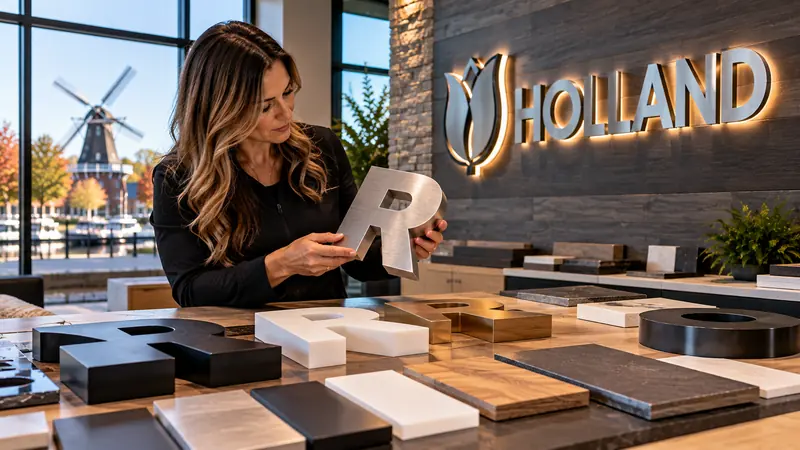
D-Sign LLC helps Holland, Michigan business owners choose dimensional letter materials that match their brand, location and the local weather. The right choice balances appearance, durability, finish and installation method so letters look great and hold up over time.
What is a dimensional letter sign and how does it differ from flat graphics?
A dimensional letter sign uses raised, freestanding characters to add depth and architectural interest compared with flat graphics. Dimensional letters create shadows, highlights and a tactile presence that a flat printed panel cannot replicate, which helps storefronts, lobbies and plazas read better at a distance and feel more substantial up close.
Which materials are most commonly used for dimensional letters?
The common materials are acrylic, aluminum, other metals such as stainless steel, expanded PVC and foam-based fabricated materials. Each material has a typical set of strengths: acrylic for vivid color and glossy faces, metals for premium looks and durability, and PVC or foam for lightweight, budget-conscious or interior applications.
How does acrylic perform for interior and exterior dimensional letters?
Acrylic performs well indoors and is often used outdoors when protected or backed by metal. Acrylic offers smooth glossy or translucent faces for painted or backlit letters and is lightweight for easy mounting. For exterior use, long-term UV exposure can cause some acrylic grades to yellow or become brittle unless UV-stable acrylic is specified and protected, so exterior acrylic installations should consider exposure and backing choices.
Are metal letters better for exterior use?
Yes, properly finished metal letters are often the best choice for exterior durability and a high-end appearance. Aluminum is light, corrosion-resistant when coated, and accepts painted, powder-coated, brushed and clear finishes. Stainless steel provides a polished or brushed look and resists corrosion without paint. Metals resist wind and temperature cycling better than many plastics when fabricated and mounted correctly.
What about PVC, foam and other fabricated materials?
Expanded PVC and high-density foam are useful for interior branding, temporary exterior signs and locations where low weight matters. These materials are easy to route into deep profiles and are economical for large letters. They are not as durable outdoors as metal without protective coatings, and long-term exposure to ultraviolet light and moisture can cause degradation unless the material and finish are selected for exterior use.
How should Holland’s weather influence my exterior material choice?
You should select exterior materials with Holland’s precipitation, freeze-thaw cycles, snow load and UV exposure in mind. The local station normals list a total annual precipitation of 34.76 inches, which includes rain and melted snow, and that affects moisture exposure for exterior signs (station normals). Average summer highs and winter lows help evaluate thermal expansion and contraction; typical monthly normals show an average July high of 81.7 degrees Fahrenheit and an average January low of 19.9 degrees Fahrenheit (Holland climate data). Holland is listed in USDA Plant Hardiness Zone 6b, which indicates regular winter temperatures that influence material choice and finish longevity (USDA zone listing). The area also reports substantial seasonal snow, with average annual snowfall near 75 inches, so wind, freeze-thaw and snow accumulation should factor into mounting and structural considerations (Visit Holland weather).
How do finish options affect appearance and durability?
Finish choice directly affects both look and lifespan. Painted finishes let you match brand colors and work on most substrates, but painted plastics and metals require proper priming and coatings to resist peeling and chalking. Brushed metal finishes give a premium satin appearance and hide small scratches, while polished metal provides mirror-like gloss that requires more maintenance to keep fingerprint and weather marks from showing. Powder coat finishes on aluminum give long-lasting color and corrosion resistance. Clear protective coatings can extend life for exterior painted acrylic and PVC, especially under strong sunlight.
How do mounting methods and letter depth change the finished appearance?
Mounting method and depth change legibility and perceived quality. Stud-mount letters set off the wall with visible shadow and are sturdy for heavier materials. Raceway or backer-mounted letters simplify wiring for illuminated letters and create a flush look. Through-bolting is best for high-wind facades. Letter depth and spacing matter visually: shallow letters are subtle and modern, while deeper letters cast stronger shadows and read from farther away. Wider spacing improves legibility at a distance, while tighter spacing feels compact and upscale for lobby logos.
Which materials suit specific business types in Holland?
Material choice depends on visibility needs, brand, and building type. For professional offices and law firms choose metal letters with painted or brushed finishes for a conservative, durable look. Restaurants and retailers benefit from acrylic or metal letters with vibrant paint or translucent faces for halo lighting to attract evening foot traffic. Multi-tenant commercial buildings often use aluminum for consistency and durability across suites. Interior lobby signs can use acrylic or foam for dimensional effect with lower maintenance obligations. Our team works with each client to match material to use and brand intent, taking into account visibility goals, the building facade and expected maintenance cycles. We provide side-by-side samples and finish mockups so decision makers can see and feel the options before fabrication.
What installation and maintenance considerations should I plan for?
Plan mounting to match facade material and wind loading, and ask about corrosion-resistant fasteners near salt air or aggressive moisture. Maintenance is usually simple: mild detergent and non-abrasive cloth for painted and acrylic faces, and specific metal cleaners for stainless or polished finishes. Expect higher maintenance for polished metals in exterior settings. Schedule occasional inspection for fastener tightness, paint condition, and sealant integrity to avoid water infiltration behind letters.
How we help Holland businesses decide and install dimensional letters?
We consult on material selection, provide physical samples, review mounting and permit needs for Holland and West Michigan facades, and produce fabrication drawings for approval. We can also prepare documentation for permit submissions and walk clients through maintenance and service plans to protect their investment. We evaluate branding, site exposure, and local weather effects to recommend materials and finishes that fit each customer. We also coordinate permitting, fabrication and installation and provide routine service and repairs as needed. For a clear next step, contact us for a free consultation and on-site review so the final material choice suits your location and design goals.
We support clients through the decision process with hands-on samples, finish mockups and detailed drawings. During an on-site review we measure facade conditions, note exposure angles, and discuss maintenance access and cleaning routines so we can recommend not just the right material but realistic upkeep expectations. We explain trade-offs such as initial appearance versus long-term maintenance, and provide documentation that property managers can use for budgeting and service planning. If illumination, wiring or routing is needed we show mounting details and electrical access options so installers and electricians have what they need. Our aim is to make material selection transparent and practical for building owners and managers.
Quick material checklist
- Acrylic: great for glossy faces and backlit translucent letters; best for interior or protected exterior locations.
- Aluminum: lightweight, durable and paintable; good for most exterior needs when properly finished.
- Stainless steel: premium, corrosion-resistant finish with low maintenance.
- PVC and foam: lightweight, economical, and ideal for interior and temporary exterior uses when coated.
- Fabricated composites: useful for deep profiles and custom shapes where weight or routing is a concern.
Choosing the right material for dimensional letters in Holland, Michigan is a matter of balancing brand, facade, budget and local weather. Our installers can assess the site, show samples and recommend materials and finishes that deliver the look you want and the durability required for West Michigan exposure, and we can outline maintenance steps and service options to preserve that investment.
Frequently asked questions
What materials are best for exterior dimensional letters in Holland, MI?
Aluminum with a durable finish or stainless steel are usually best for exterior dimensional letters in Holland, MI because they resist corrosion and handle freeze-thaw cycles and snow loads better than many plastics.
Can acrylic be used outdoors for dimensional letters?
Acrylic can be used outdoors when UV-stable grades and protected mountings are specified, but long-term exposure to sunlight and moisture requires careful finish and backing choices to avoid yellowing or brittleness.
How does Holland weather affect sign material choice?
Holland experiences significant seasonal change including an average annual precipitation of 34.76 inches and average annual snowfall near 75 inches, so materials and mounting must withstand moisture, snow accumulation and freeze-thaw conditions (station normals, Visit Holland weather).
What finish should I choose for a premium office sign?
For a premium office sign choose brushed or polished metal finishes, or painted metal for specific brand colors, because these finishes convey permanence and hide wear when properly maintained.
How does letter depth affect visibility?
Deeper letters cast stronger shadows and improve distance legibility, while shallower letters read as more subtle; spacing and mounting also change perceived weight and clarity.
Will you handle permits and installation?
Yes. We review permitting requirements, recommend appropriate mounting methods for your facade, and coordinate fabrication and professional installation for Holland and surrounding West Michigan communities. We can also assist with permit documentation and local code questions when needed.
This article was generated by ArticlesGR.ai by PixelGR.com
Sources
- Summary of Monthly Normals ncei.noaa.gov
- Holland, Michigan, Climate & Weather geostat.org
- Holland, Michigan, Wikipedia en.wikipedia.org
- Weather, Holland (Visit Holland) holland.org